
Marrakech
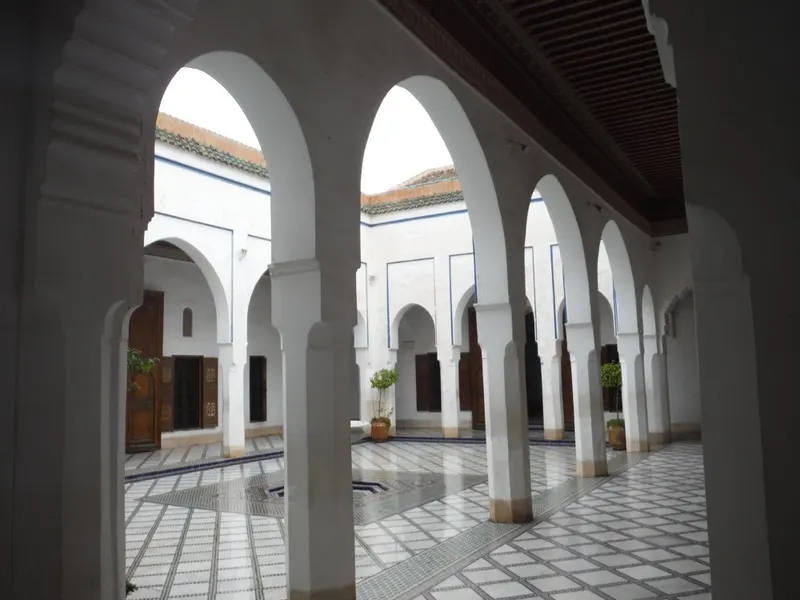
Palace details, garden spaces and the different rhythms of the medina and Gueliz.
In this guide
Overview
Marrakech, also written Marrakesh, gives you two different starting points: the medina and the avenues of Gueliz. UNESCO’s heritage record includes Bahia Palace, the Ben Youssef madrasa and the city’s gardens. Choose your accommodation around the places you want to spend time, rather than expecting to cover every district in one day.
Experiences to make room for
Try a medina-focused day with one architectural visit, then a separate garden or Gueliz day. Bahia Palace and Menara are options to investigate, not a ready-made timed circuit. Check individual admission arrangements before reserving the rest of the day around them.
Read the city through its materials
At Bahia Palace, the tourism office draws attention to zellige, marble and gardens. Look at how a patterned surface meets a doorway or a courtyard edge, then compare that detail with the next room. UNESCO also identifies carved and painted wood, plasterwork and lime plaster among the medina’s building crafts. These are useful things to notice at an architectural visit, rather than a checklist of objects to buy.
Back to contentsWalls, gardens and an imperial city
Marrakech developed under the Almoravids and Almohads; its heritage includes monumental gates and ramparts as well as palaces. Menara’s water feature and pavilion offer a different architectural subject from Bahia’s interiors. Choose between them according to what interests you: a close look at decorative work or the relationship between water, buildings and open space. Gueliz can be a separate city outing, with its own time allowance.
Jemaa el-Fna: leave time to listen
Jemaa el-Fna’s UNESCO recognition concerns a cultural space: storytelling, music and oral traditions, as well as the people who keep them alive. That gives a visit a different purpose from collecting a view of the square. If you encounter a performance, take time to listen and ask before recording it. Ask a local guide about the language, the story and the performer’s practice; do not assume a particular act will be there on your visit.
Ben Youssef: a place built for learning
Ben Youssef offers another way to read Marrakech’s architecture. The regional tourism council describes a sixteenth-century Saadian madrasa, with student rooms arranged on two floors around a courtyard. Look beyond the courtyard photograph: how did the smaller rooms relate to shared space? How did the building accommodate study and daily life? Choose this visit for that educational history, or Bahia for palace interiors; you do not need both in a short day. Check which areas visitors can enter before planning around it.
Back to contentsLocal context
A palace visit and a neighbourhood walk call for different attention. Follow site instructions at monuments; in residential lanes, leave entrances clear and ask before photographing people.
Getting around
Compare the exact address with your plans in the medina and Gueliz. Ask a medina host for the vehicle drop-off point and the remaining walk with luggage. Ask any accommodation about stairs and room access; a neighbourhood name alone does not answer those questions.
Next steps
Our city-and-coast outline allocates three Marrakech nights before the move to Essaouira. For a shorter stay, keep either the garden day or the second medina outing instead of compressing both.
Back to contentsSources
Each reference lists the information it supports and the date it was checked.
- Moroccan National Tourist Office: Marrakech
Place context: medina, gardens and Gueliz
Checked
- Moroccan National Tourist Office: getting around
Transport categories only. Does not substantiate suggested pacing, current services, fares, journey times or access.
Checked
- UNESCO World Heritage Centre: Medina of Marrakesh
Uses Marrakesh as the English spelling. Almoravid and Almohad history, ramparts, gates, Menara water feature and pavilion, and medina building crafts. Does not verify visitor access or current opening arrangements.
Checked
- Moroccan National Tourist Office: museums and art galleries
Bahia Palace: zellige, marble and gardens. No current admission or access claims.
Checked
- UNESCO Intangible Cultural Heritage: Cultural space of Jemaa el-Fna Square
Cultural-space recognition, storytelling, music and oral traditions. Not a performance schedule or confirmation of particular practitioners.
Checked
- Marrakech-Safi Regional Tourism Council: Medersa Ben Youssef
Sixteenth-century Saadian building and student rooms on two floors around a courtyard. Not current visitor access, opening hours or prices.
Checked
Something needs attention? Read about corrections.
Back to the start of this guide