
Agadir
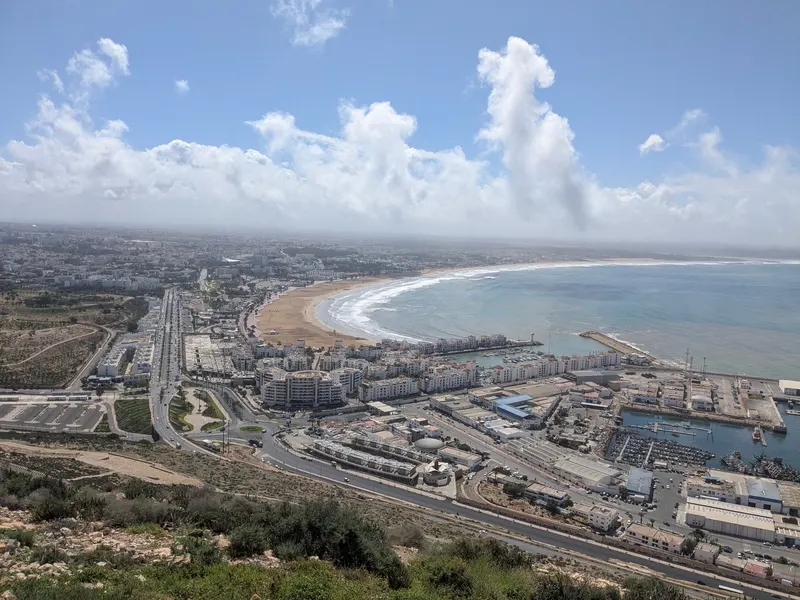
Atlantic beach time, a working city market and museums that connect regional art with the story of rebuilding Agadir.
In this guide
Overview: a coastal city with its own story
Agadir suits a trip that gives the Atlantic some space: time by the beach, a meal along the seafront and a reason to venture into the city. Its cultural stops add a different perspective to a resort stay. Decide whether you want to sleep near the waterfront or use the city as a starting point for the Souss. Those choices shape the journeys you make each day.
Experiences: the seafront and Souk El Had
Begin with a section of the seafront rather than making its entire length a walking target. For another side of Agadir, choose Souk El Had, where the regional tourism council describes produce, household goods, clothing and craft stalls. Pick an entrance as your meeting point and photograph its identifier before exploring. Leave time for ordinary shopping activity; the market serves residents as well as visitors. Ask before photographing people or their work.
Local context: understand the rebuilding
The 1960 earthquake is central to Agadir’s modern history. The Museum of the Reconstruction of Agadir, housed in the former Bank Al-Maghrib building, uses photographs, videos and archives to trace the disaster and the city’s rebuilding. The regional tourism council also dates the establishment of Souk El Had in Amsernat to the period after the earthquake. Together, these places offer a way to connect daily city life with its recent past.
Back to contentsArt: look between objects and paintings
Agadir Musée d’Art brings regional jewellery and carpets into conversation with modern and contemporary artworks. The National Museums Foundation describes an exhibition organised around relationships between objects and their artistic representation. Compare a material, shape or colour across the displays rather than treating the craft objects as an introduction to the paintings. Check the museum’s current visitor information when choosing your cultural stop.
Plan the day: Monday and Tuesday differ
Souk El Had and Agadir Musée d’Art both list Monday closure, while the Reconstruction Museum lists Tuesday closure. If you have only one city day, choose it around the place that matters most; these three stops do not share the same weekly schedule. Recheck their current visitor information before setting out. Then map your accommodation, the market and your chosen museum together: a waterfront address does not tell you the transfer needed for each visit.
Next steps: coast or inland
Three nights would leave two full days between arrival and departure: one for a city visit with beach time, another to keep flexible. This is a planning allowance, not a required stay. Taroudant adds a walled medina and inland setting; Tafraout adds Anti-Atlas landscapes. Choose one extension and confirm its connections before assigning nights. More hotel changes reduce the unhurried coast time that may have brought you here.
Back to contentsSources
Each reference lists the information it supports and the date it was checked.
- Moroccan National Tourist Office: Agadir–Taghazout
Atlantic setting, seafront and waterfront cafés. No sunshine guarantee, beach safety, event date or transfer time adopted.
Checked
- Agadir Souss-Massa Regional Tourism Council: Souk El Had
Market goods, establishment in Amsernat after the 1960 earthquake and the listed Monday closure for cleaning. Payment options require a separate check.
Checked
- Fondation Nationale des Musées: Agadir Musée d’Art
Collection pairs regional jewellery and carpets with modern and contemporary art; the museum lists Monday closure. Recheck current visitor information before setting a date.
Checked
- Fondation Nationale des Musées: Museum of the Reconstruction of Agadir
Former Bank Al-Maghrib setting; photographs, videos and archives addressing the 1960 earthquake and reconstruction; the museum lists Tuesday closure. Recheck current visitor information before setting a date.
Checked
Something needs attention? Read about corrections.
Back to the start of this guide