
Essaouira
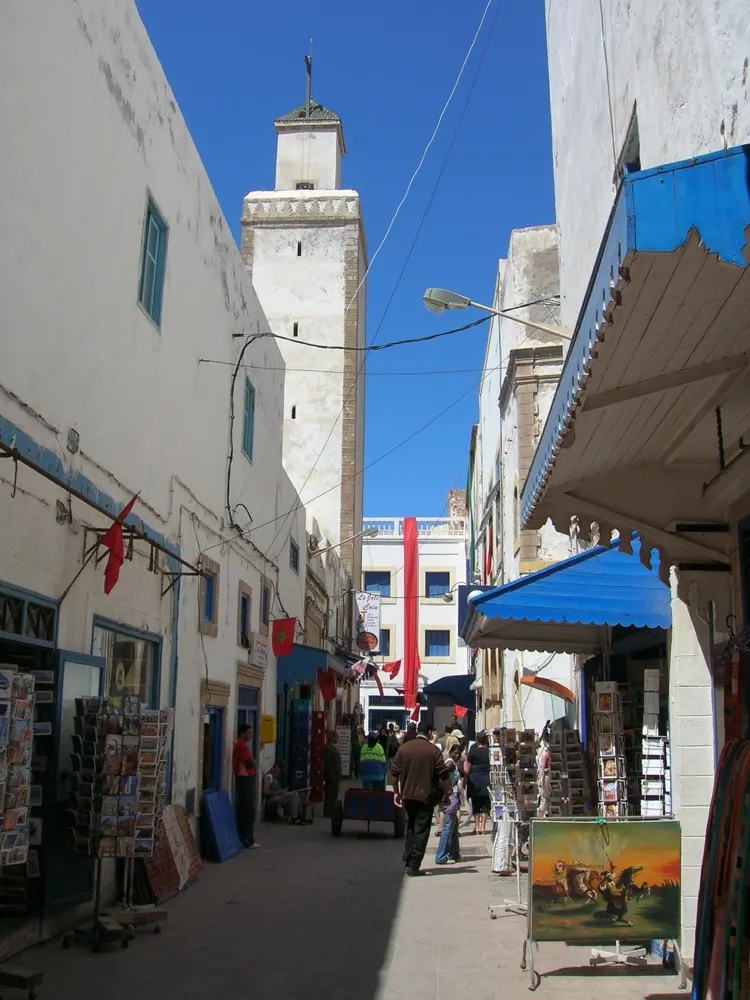
An Atlantic trading town, its fortified medina and the context behind Gnawa.
In this guide
Overview
Essaouira combines an Atlantic waterfront with a walled medina. UNESCO’s account explains its history as a fortified trading port. Our city-and-coast outline pairs it with Marrakech for a change of setting, rather than treating the coast as an extra stop on a country-wide circuit.
Experiences to make room for
Give the medina one unhurried outing and the waterfront another. The fishing port is a working environment: follow access instructions and leave room for people carrying out their jobs. Ask before photographing workers or residents. A coastal stay need not revolve around swimming; decide whether walking, architecture or time by the water is your priority.
Why the walls and port belong together
Essaouira’s eighteenth-century development was a deliberate royal trading project under Sultan Sidi Mohamed Ben Abdallah. UNESCO describes fortifications influenced by European military design alongside Moroccan town-planning traditions. Read the ramparts as part of that commercial history, then compare the enclosed medina with the harbour edge. This is an architectural theme for an outing, not a promise that every stretch of wall or working port is accessible.
Back to contentsListen with context: Gnawa
Gnawa carries musical, social and spiritual traditions shaped by histories of slavery and the slave trade. For a first listen, notice three parts: the guembri, a three-string lute; metal castanets called qraqeb; and voices answering in chorus. The Philharmonie de Paris describes these in its Gnawa listening introduction. Try following one part before hearing how the ensemble fits together. UNESCO’s documentary gives the wider cultural context. When choosing an announced public performance, read who is playing and how the programme describes the music. A concert is not an invitation to a private ritual.
Bayt Dakira: Jewish memory within the trading city
Bayt Dakira, the House of Memory, adds the history of Essaouira’s Jewish community to a visit centred on the port and ramparts. It is associated with the Simon Attias synagogue in the old kasbah, built in the late nineteenth century by the merchant whose name it carries. ICESCO describes the museum’s purpose as preserving and presenting Moroccan Jewish heritage. This gives the trading-city story a human focus: religious life, community memory and the people behind commerce. Make room for the institution’s own interpretation, rather than using the synagogue only as an architectural backdrop. Current visiting arrangements and displays should be checked separately.
Look closely at woodwork
Essaouira’s craft story includes cabinetmaking in thuya wood. The tourism office describes decorative work combining wood with materials such as metal wire and mother-of-pearl. If this interests you, give browsing its own space in the day: compare the grain, joins and inlay on a few pieces before choosing one. Ask who made it, which materials were used and how to care for it. A display of similar objects is a starting point for questions, not evidence that every piece was made locally.
Back to contentsAn architecture outing with a smaller focus
UNESCO highlights the medina’s surviving layout, construction methods and use of local stone called manjour. Choose one public street or square and look at the relationship between stonework, doorways and the line of the buildings before moving on. This can give a shorter visit a clear purpose without trying to cover every lane. For a two-night stay, our suggestion is one medina outing with time for craft browsing and a separate waterfront outing. Add another night if you would rather revisit a place than fit more stops into each day.
Getting around
For a Marrakech–Essaouira move, confirm the current road service or a quoted transfer for your dates. Check the exact drop-off and remaining distance to your accommodation. If your flight departs from Marrakech, plan the return move explicitly; it is absent from the seven-day outline.
Next steps
The city-and-coast outline gives Essaouira three nights and assumes departure near the final base. If you must return to Marrakech, consider moving back on day six and spending the final night there, after checking that the journey works for your flight.
Back to contentsSources
Each reference lists the information it supports and the date it was checked.
- Moroccan National Tourist Office: Essaouira
Place context: coastal location, medina, ramparts and fishing port
Checked
- Moroccan National Tourist Office: getting around
Transport categories only. Does not substantiate suggested pacing, current services, fares, journey times or access.
Checked
- UNESCO World Heritage Centre: Medina of Essaouira
Eighteenth-century royal trading-port development under Sidi Mohamed Ben Abdallah; European military influences and Moroccan urban traditions. Does not verify access to ramparts or harbour. Links to UNESCO’s Gnawa heritage record. Describes local manjour stone and the medina’s retained street layout and construction methods.
Checked
- UNESCO Multimedia Archives: Gnaoua
Gnawa musical, social and spiritual practices; historical relationship to slavery and the slave trade; documentary record. No event date, performance availability or ritual-access claim.
Checked
- Philharmonie de Paris: Transes gnaouas listening introduction
Institutional musicology introduction identifies the guembri as a three-string lute, metal qraqeb and answering chorus. Used for a listening introduction only; no claim about an Essaouira performance, schedule or access to a ritual.
Checked
- Moroccan National Tourist Office: shopping in Essaouira-Mogador
Essaouira cabinetmaking and thuya wood with decorative inlay; not a recommendation of particular shops, verified provenance, current workshop access or product sustainability.
Checked
- Essaouira Provincial Tourism Council: Simon Attias Synagogue, Bayt Dakira
Bayt Dakira’s association with the Simon Attias synagogue in the old kasbah; synagogue built in the late nineteenth century by the merchant whose name it carries. No current visitor access claim.
Checked
- ICESCO: visit to Bayt Dakira, 15 May 2022
Institutional account identifies Bayt Dakira as a museum preserving and presenting Moroccan Jewish heritage. Used for its cultural purpose, not current displays or access.
Checked
Something needs attention? Read about corrections.
Back to the start of this guide