
Rabat
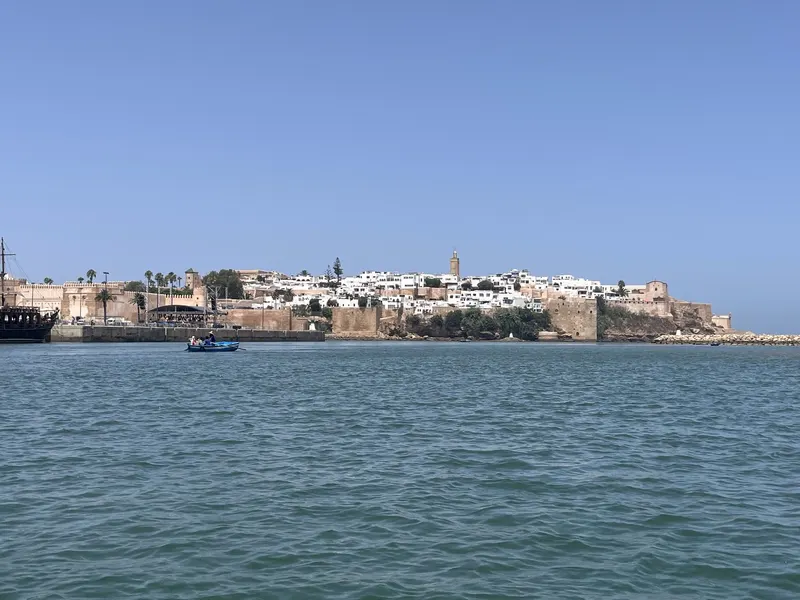
A capital to read through its kasbah, planned avenues and modern Moroccan art.
In this guide
Overview: a capital with several layers
Rabat offers a way to see Moroccan urban history beyond a single medina. Its UNESCO listing includes the planned city built during the French Protectorate as well as much older quarters, walls and monuments. Give the streets and public spaces as much attention as individual buildings. Two nights make a useful starting allowance for a first visit; add a third if museums are a main interest.
Experiences: choose two historic areas
The Kasbah of the Oudayas and the Hassan Tower area give a first day two distinct focuses. At the kasbah, spend time with its lanes and gardens. At Hassan, the unfinished minaret and nearby Mohammed V Mausoleum invite a closer look at scale, stone and decoration. Choose these as separate outings with a pause between them, rather than promising yourself every major monument in one walk.
Modern art belongs in the plan
The Mohammed VI Museum of Modern and Contemporary Art introduces another part of Moroccan visual culture. The foundation names Mohamed Melehi, Farid Belkahia and Malika Agueznay among artists represented in its collection. The foundation lists Tuesday as the museum’s weekly closure. Recheck the opening arrangements and current exhibitions before setting the day, then choose one artist or theme to follow through the galleries. A collection listing does not mean every work is on display; leave room to discover what the museum is showing during your visit.
Back to contentsLocal context: a city is more than its monuments
UNESCO’s account connects modern planning with earlier Moroccan architectural traditions. Look at how a street opens into a square, where planting changes the experience of a public space, and how newer façades refer to older forms. The tourism office also highlights Rbati carpets and leather, textile and jewellery work. If something interests you in a shop, ask about its maker and material before discussing a purchase.
Chellah: choose how to explore the ruins
Chellah brings together the ancient city of Sala Colonia and a later Marinid necropolis. Choose standard admission to explore independently, or an audio-guided option for more explanation of what you are seeing. The operator recommends reserving audio equipment ahead; a standard ticket does not include it. Online tickets can be shown on a smartphone, so save yours before setting out. The operator also notes that some areas may remain inaccessible to visitors with reduced mobility: ask which parts of the route suit your needs before choosing a ticket. Give this outing its own time rather than adding it after a full museum day.
Getting around: plan from your actual arrival point
Save the exact station or airport name from your booking and the address of your accommodation. Ask your host how to connect the two, including the last stretch with luggage. Group each outing around one part of the city and decide how you will return before leaving. For a short stay, accommodation that suits your chosen visits can matter more than being near the arrival point.
Back to contentsNext steps: compare Rabat with Casablanca
Casablanca makes a useful companion if architecture interests you: compare Rabat’s planned capital with Habous and the Art Deco centre there. Give each city its own nights and check the connection for your travel date. If you have only one full day in Rabat, choose the two historic areas or one area and the museum; keep Chellah for a longer stay.
Sources
Each reference lists the information it supports and the date it was checked.
- UNESCO World Heritage Centre: Rabat, Modern Capital and Historic City
World Heritage inscription; the early twentieth-century planned city alongside earlier urban layers, Almohad walls and gates. No present access or walking-route claim.
Checked
- Moroccan National Tourist Office: medina in Rabat
Hassan Tower as an unfinished minaret, nearby Mohammed V Mausoleum, Chellah archaeological site, Oudayas kasbah and Rbati craft traditions. Does not verify current opening arrangements.
Checked
- Fondation Nationale des Musées: Mohammed VI Museum of Modern and Contemporary Art
Modern and contemporary art remit, temporary exhibitions and collection including Melehi, Belkahia and Malika Agueznay. The practical information lists Tuesday closure; recheck opening arrangements and admission prices before visiting.
Checked
- Chellah / Rabat Region Historical Heritage Company: the site
Ancient Sala Colonia and the later Marinid necropolis as distinct layers of the archaeological site.
Checked
- Chellah / Rabat Region Historical Heritage Company: practical information
Standard admission excludes extras; audio-guided visits and advance equipment reservation; smartphone tickets accepted; some areas may be inaccessible to visitors with reduced mobility. Confirm the relevant route and current ticket options before booking.
Checked
Something needs attention? Read about corrections.
Back to the start of this guide