
Fes
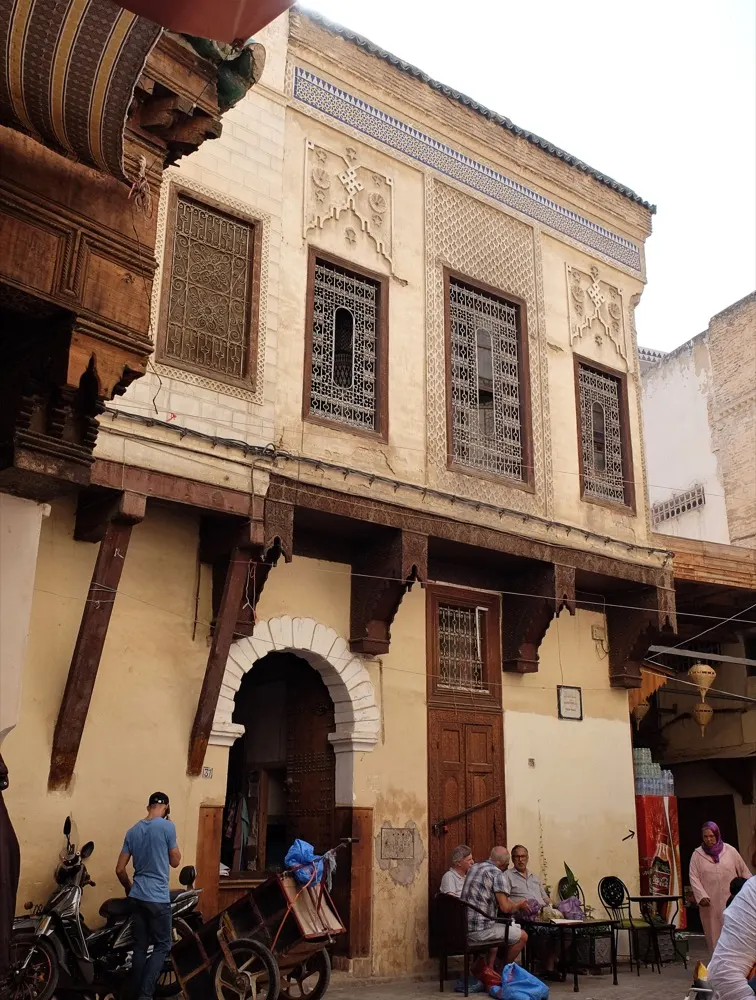
Two historic city quarters and a closer look at the craft of woodwork.
In this guide
Overview
Fes, also written Fès or Fez, rewards a trip interested in how a historic city fits together. UNESCO distinguishes Fez el-Bali from the later Fez Jedid. Start with one part of the medina; a list of monuments is less useful than knowing where your day begins and ends.
Experiences to make room for
Use Bab Boujloud as one possible orientation point to discuss with your host. Choose a short medina outing and one place to investigate, such as the Nejjarine Museum. A second day can return to a street or craft interest you want to understand better. Confirm visitor access and opening arrangements separately.
Two parts of the historic city
Fez el-Bali and Fez Jedid belong to different stages of the city’s growth. UNESCO dates the founding of Fez Jedid, west of the older town, to 1276 under the Marinids. The older city itself began as two fortified quarters on opposite banks of the Fez river: the Andalous and Kaïrouanais quarters. These distinctions give you better questions for a guide than asking to see “the whole medina”.
Back to contentsNejjarine: the building and the collection
Start with the building itself. The foundation’s history describes Nejjarine as a warehouse and trading place built in 1711, with three levels around an open courtyard and turned wooden balustrades on the upper galleries. Then compare wood used in the building with wood made into objects: the tourism office’s collection description includes carpentry tools and musical instruments. Look for the connection between a material, its purpose and its decoration. Confirm which parts of the museum are open before visiting.
A madrasa visit: start with its purpose
The national tourism office identifies Bou Inania and Al Attarine as historic Islamic schools and draws attention to their stucco and tile work. Pick one as a starting point for understanding educational architecture. Ask how the courtyard, teaching spaces and accommodation worked together, then look at the decoration within that arrangement. A named monument is not a promise of access to every room: confirm current visiting arrangements and the entrance you should use.
Al Batha: follow an object through time
For a broader collection than Nejjarine’s woodwork focus, consider Al Batha Museum of Islamic Arts. The museum foundation describes ceramics, metalwork, manuscripts and textiles, alongside an Andalusian garden. Choose one material and follow its labels: when was an object made, what was it used for, and what connects it to Fes or another place? This can give a second city day a clear focus rather than a checklist of collections. Check the museum’s own information for current displays and access.
Back to contentsLocal context
UNESCO describes living skills and culture alongside the medina’s buildings. When visiting a workshop, ask whether visitors are welcome and whether photographs are acceptable. Agree what a guided visit includes before it starts; do not turn an active workspace into an assumed attraction.
Getting around
Ask for a named meeting point and walking directions from it to your accommodation. Confirm the luggage route, stairs and return directions before arrival. If you arrange a guided walk, describe your preferred distance and pace rather than relying on a generic city tour.
Next steps
The northern outline gives Fes five nights, deliberately more than the two or three suggested for an introduction. Keep that extra time only if slower exploration or personal visits appeal; otherwise shorten the trip rather than inventing a compulsory excursion.
Back to contentsSources
Each reference lists the information it supports and the date it was checked.
- Moroccan National Tourist Office: Fez
Fez el-Bali, Bab Boujloud and Nejjarine Museum as place references; not current visitor access or a verified walking route.
Checked
- Moroccan National Tourist Office: getting around
Transport categories only. Does not substantiate suggested pacing, current services, fares, journey times or access.
Checked
- UNESCO World Heritage Centre: Medina of Fez
Fez el-Bali and Fez Jedid; 1276 Marinid founding of the latter to the west; original Andalous and Kaïrouanais quarters divided by the Fez river; living craft context. Not a verified visitor route.
Checked
- Moroccan National Tourist Office: museums and art galleries
Nejjarine collection focus on woodwork, including carpentry tools and musical instruments. Not current displays, opening hours or workshop access.
Checked
- Moroccan National Tourist Office: Hidden Gems brochure, Fez
Bou Inania and Al Attarine as historic Islamic schools with stucco and tile decoration. Does not verify current visitor access; other historical superlatives in the brochure are not used.
Checked
- Fondation Nationale des Musées: Musée Al Batha des arts de l’Islam
Collection categories include ceramics, metal objects, manuscripts and textiles; Andalusian garden. No guarantee of individual objects on display or current visitor access.
Checked
- Groupe Safari: Fondation Mohammed Karim Lamrani pour l’ensemble Nejjarine
Foundation history: built in 1711 as a warehouse and trading place; three levels around an open courtyard, with turned wooden balustrades on upper galleries. Not current visitor access or condition.
Checked
Something needs attention? Read about corrections.
Back to the start of this guide