
Chefchaouen
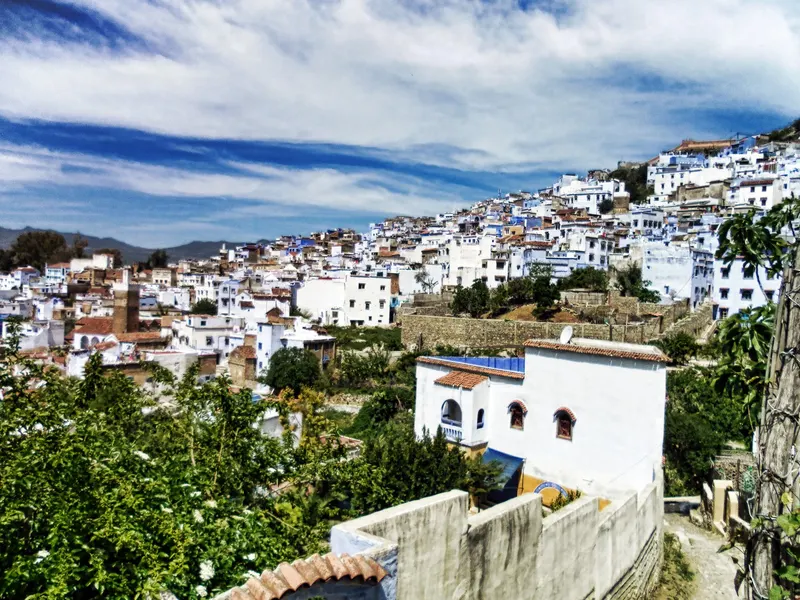
A hillside medina in the Rif, with the kasbah, textiles and a northern-route decision beyond the blue façades.
In this guide
Overview: a medina shaped by the hillside
Chefchaouen’s blue-painted buildings sit on a mountainside in the Rif. The medina’s narrow, winding lanes and the kasbah give a city visit a different setting from Tangier’s Strait-facing history or Fes’s layered urban quarters. Come with an interest in the buildings, craft and everyday use of those streets as well as their colour. A hillside setting also makes the precise location of your accommodation worth understanding before you book.
Experiences: begin with the kasbah
The kasbah stands in the old quarter with gardens and a museum described by the tourism office as holding photographs, textiles and old weapons. It offers a useful focus beyond a walk through blue lanes. If you visit, look for what the photographs reveal about changes in the city, then compare those details with the streets outside. Confirm current museum access and displays before planning around a particular collection.
Local context: follow the material
The tourism office highlights wool, wood and tanning trades, including weaving and carpentry. Choose a material that interests you and look closely at how it is worked: the structure of a woven piece or the joints of a wooden object can start a more specific conversation than asking for a souvenir. Ask where a piece was made and by whom. A shop in Chefchaouen is not proof that every item is locally produced, and a workshop visit needs an invitation or agreed arrangement.
Back to contentsFood culture: the landscape reaches the table
Chefchaouen also belongs to the story of Mediterranean food heritage. UNESCO’s account names the city among communities whose traditions connect growing and harvesting food with preserving, preparing and sharing it. The interest is broader than a particular dish: it includes the knowledge passed between generations and the social life around a meal. At a market or over lunch, let that context guide a specific question: which ingredients come from the surrounding Rif, how are they preserved, and when are they used? A conversation about an olive, a grain or a family recipe can reveal a part of Chefchaouen that a photograph of a blue street cannot.
Keep a mountain outing separate from a city visit
Talassemtane National Park and Akchour appear among the tourism office’s places to explore around Chefchaouen. Treat either as a separate piece of planning, with a named destination, suitable local advice and confirmed outward and return arrangements. This guide covers the city introduction; it does not establish a walking route, current trail conditions or how long an outing takes.
Getting around: know the final approach
Ask your host to mark the vehicle drop-off point and explain the approach to the door, including steps, slopes and luggage arrangements relevant to your group. Save that description alongside the accommodation address. For travel from Tangier or onward to Fes, check whether a direct connection exists for your date and confirm its departure and arrival points.
Back to contentsNext steps: add a base only if the Rif is a priority
Our suggested starting allowance is two nights for a city introduction, leaving one full day between arrival and departure; a third night offers more uncommitted time. Plan any mountain outing separately. The ten-day northern outline currently uses only Tangier and Fes. To include Chefchaouen, first compare the nights you would remove from those cities and the additional transfer with the time gained here. If the kasbah and Rif setting are central to your trip, revise the outline around them; if they are a passing curiosity, the existing two-city trip still stands on its own.
Sources
Each reference lists the information it supports and the date it was checked.
- Moroccan National Tourist Office: Chefchaouen
Mountainside location in the Rif, blue façades, winding medina lanes, kasbah and gardens; identifies Talassemtane National Park and Akchour among surrounding attractions. No journey time, trail condition, access or opening-hours claim adopted.
Checked
- Moroccan National Tourist Office: Chefchaouen medina
Kasbah museum context including photographs, textiles and old weapons; wood, wool and tanning trades, with weaving and carpentry. Does not verify current displays, workshop access or the origin of an individual item for sale.
Checked
- UNESCO Multimedia Archives: La Diète méditerranéenne
Names Chefchaouen among communities associated with Mediterranean food heritage; describes cultivation, preservation, preparation and shared meals as cultural practices. Used for cultural context, not nutritional advice or restaurant certification.
Checked
Something needs attention? Read about corrections.
Back to the start of this guide